If you search for solutions to a sunken concrete floor, you will encounter terms like “polyurethane foam injection,” “polymer lifting,” “slab jacking,” and “geopolymer grouting.” These are not all the same thing, and the differences matter. This article focuses specifically on two-component expanding polyurethane resin — the technology at the core of GeoLift's work — and explains in plain terms how it works, why it works, and where it is most effective.
Starting with the chemistry
Polyurethane is a polymer formed by reacting two chemical components: an isocyanate (component A) and a polyol (component B). When these two components are mixed, a chemical reaction begins that produces carbon dioxide gas as a by-product. It is this gas that causes the material to expand.
The expansion rate, final density, and structural properties of the cured foam depend on the formulation. GeoLift uses high-density, hydro-insensitive formulations specifically designed for geotechnical applications — these are very different from the low-density spray foams used in building insulation, which would be structurally inadequate for ground engineering work.
The injection process, step by step
Before any injection begins, GeoLift carries out a site investigation: ground penetrating radar (GPR) scanning to identify void locations, dynamic cone penetrometer tests to profile sub-base strength, and precision optical levelling to map differential settlement across the slab.
- Port drilling. 16mm holes are drilled through the concrete slab at grid locations — typically 30 seconds per port.
- Probe insertion. A steel injection probe is seated into each port with a one-way valve to prevent backflow.
- Mixing and injection. Components A and B are pumped through a static mixing tip. The mixed resin enters the sub-slab zone in its liquid state — thin enough to flow into cracks and small voids before it begins to expand.
- Expansion and curing. The resin expands to fill the available void space and densifies the surrounding soil by displacing loose particles and binding them.
- Lifting. As the expanding resin exerts upward pressure on the slab, the slab lifts. Monitored in real time using digital levels accurate to 0.1mm.
- Completion and patching. Port holes are patched with non-shrink cementitious mortar.
What happens to the resin underground
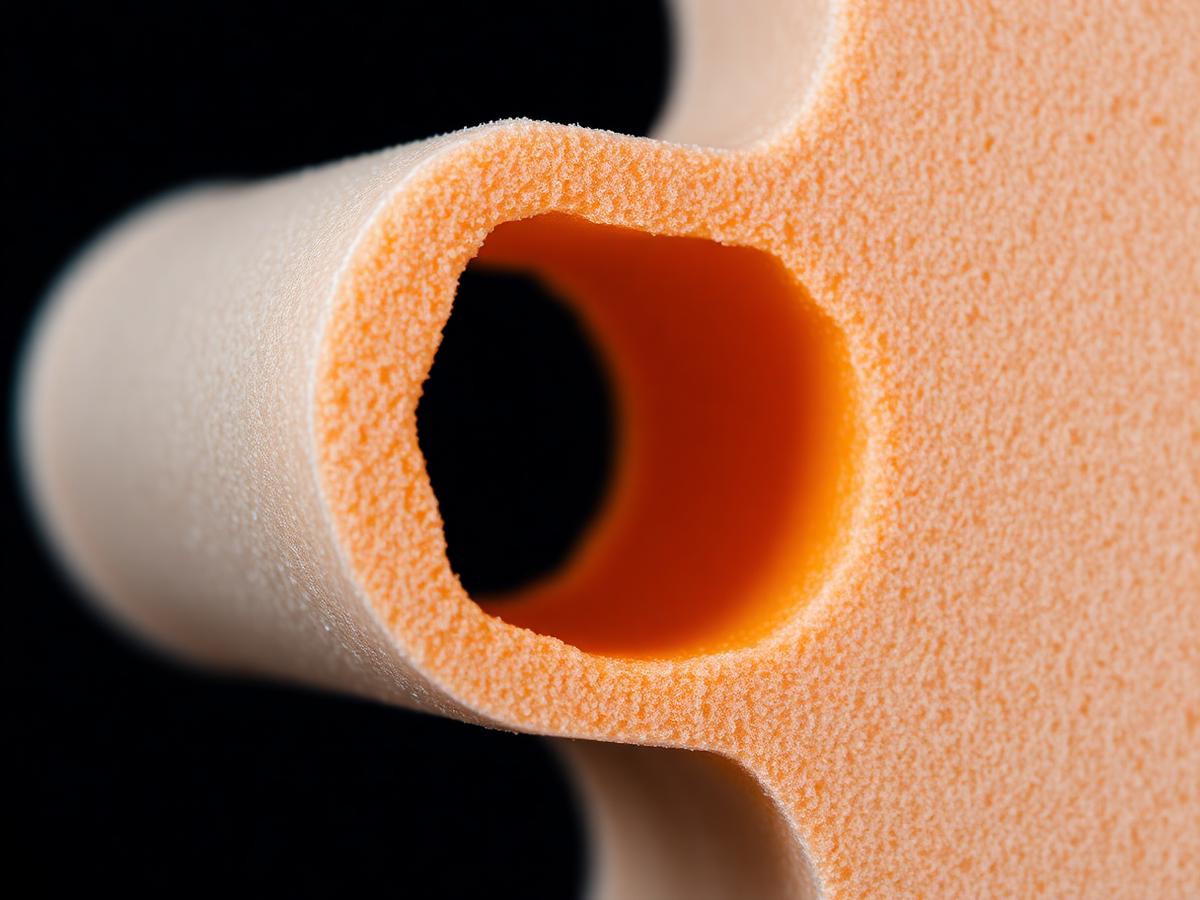
Once cured, the polyurethane foam becomes a rigid, closed-cell solid. The closed-cell structure means it does not absorb water — an important property for sub-slab work, where groundwater and monsoon ingress are common. The foam does not biodegrade, does not support plant growth, and does not leach chemicals into surrounding soil under normal operating conditions.
The cured material bonds to the underside of the concrete slab and to soil particles, creating a composite zone that is stiffer and more homogeneous than the original sub-base. This is why polymer injection addresses the cause of settlement rather than merely treating the symptom.
What polyurethane injection cannot do
- Where the concrete slab itself is structurally compromised (severely cracked or broken), lifting it may cause further fracture. In these cases, partial replacement is needed first.
- Where settlement is caused by ongoing active loading beyond the original design intent, polymer injection can stabilise and lift, but the underlying design issue remains.
- In highly organic soils (peat, filled landfill material), expansion behaviour can be unpredictable and injection is generally not recommended without detailed ground investigation.
How long does it last?
High-density polyurethane resin has an expected structural life well in excess of 25 years in typical sub-slab conditions. The material is stable across the temperature range experienced in India, resistant to diesel and light fuel contamination, and unaffected by the wet-dry cycles of the monsoon climate.